
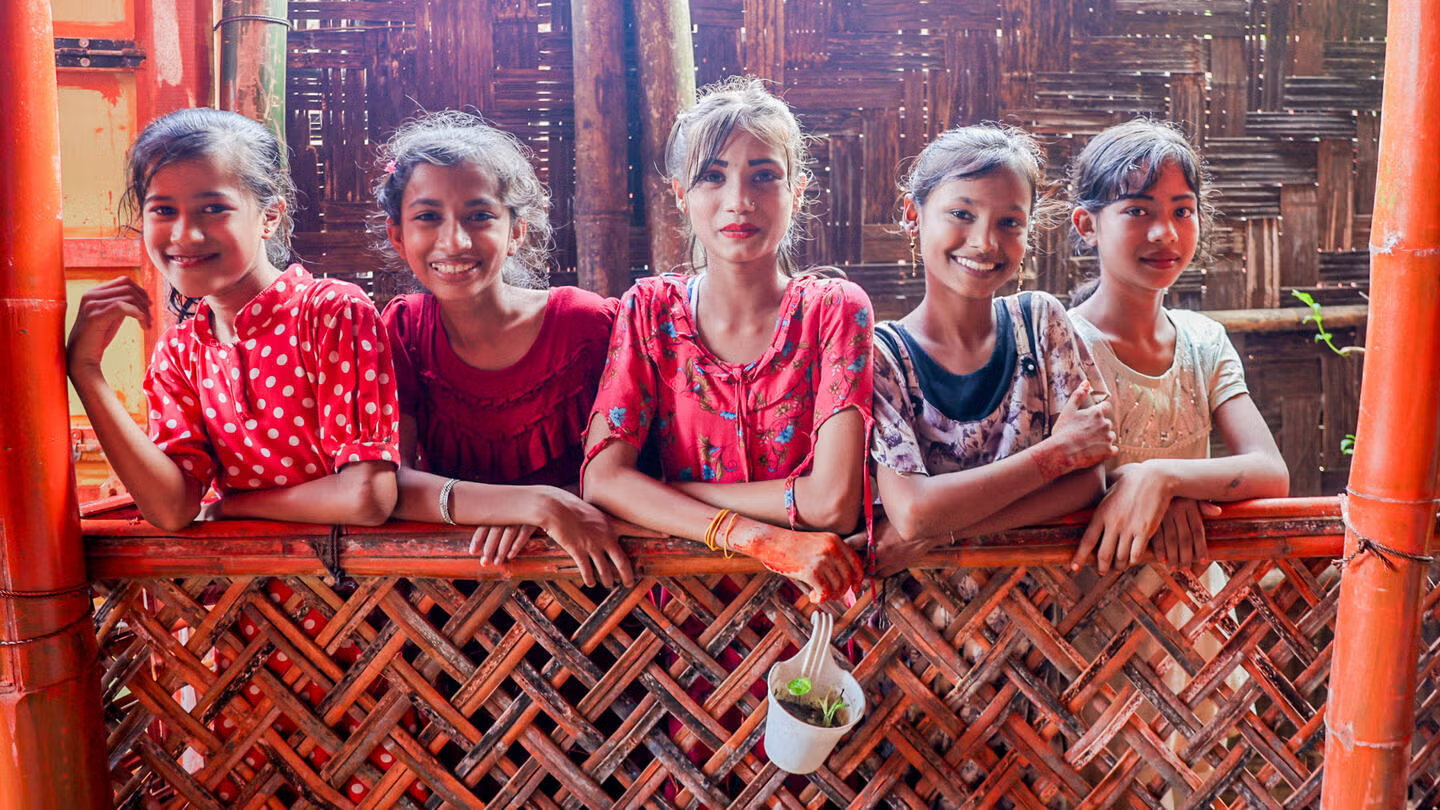

By Tuhin Sarwar, Investigative Journalist | Media Strategist | Verified Researcher
ORCID iD: https://orcid.org/0009-0005-1651-5193
Rohingya Refugee Crisis in Bangladesh: Human Rights at the Edge of Survival
Tuhin Sarwar — Ground-Verified Human Truths
Quick Answer
The Rohingya refugee crisis in Bangladesh is a prolonged humanitarian situation where over one million Rohingya refugees live in overcrowded camps, facing restricted access to human rights, limited mobility, and dependency on humanitarian aid.
Introduction
The Rohingya refugee crisis in Bangladesh remains one of the most complex humanitarian challenges in South Asia. More than one million Rohingya refugees continue to live in overcrowded camps where survival depends on restricted access to basic human rights, limited resources, and prolonged uncertainty.
This report is based on ground-level observation, field interviews, and verified humanitarian insights, focusing on human rights, displacement, and structural inequality.
Ground Reality in the Camps
- Severe overcrowding and fragile infrastructure
- Restricted mobility outside designated camp areas
- Heavy dependence on humanitarian aid
- Limited access to formal education and employment
Children grow up without stable educational pathways, while adults face structural barriers to rebuilding independent livelihoods.
Human Rights Under Structural Constraints
Human rights, as defined by international frameworks, are universal. However, within the Rohingya refugee context, these rights are limited, conditional, and structurally constrained.
- Restricted freedom of movement
- Limited access to education
- Absence of legal employment opportunities
- Lack of citizenship and long-term legal status
“This is not just displacement—it is prolonged restriction of fundamental human rights.”
Human Impact of Displacement
Human displacement is not only physical but also deeply psychological and social.
“We are alive, but we do not have a future.”
This reflects the long-term uncertainty faced by refugees, shaping identity, opportunity, and generational outlook.
Structural Challenges Sustaining the Crisis
- Statelessness and absence of citizenship
- Limited repatriation progress
- Geopolitical constraints
- Resource limitations in host regions
These factors create a prolonged humanitarian situation where emergency response continues, but long-term resolution remains limited.
Global Human Rights Context
The Rohingya crisis extends beyond Bangladesh and represents a broader global human rights issue involving international organizations, policy frameworks, and humanitarian systems.
Conclusion
The Rohingya refugee crisis in Bangladesh is not only a humanitarian emergency but also a test of global commitment to human rights and dignity.
Addressing this crisis requires sustainable international cooperation, long-term policy solutions, and protection of fundamental human rights.
Ground-Verified Human Truths — Tuhin Sarwar
Read more about the Rohingya crisis here:
https://tuhinsarwar.com/rohingya-refugee-crisis
Explore human rights investigations:
https://tuhinsarwar.com/human-rights
Ref- UNFPA