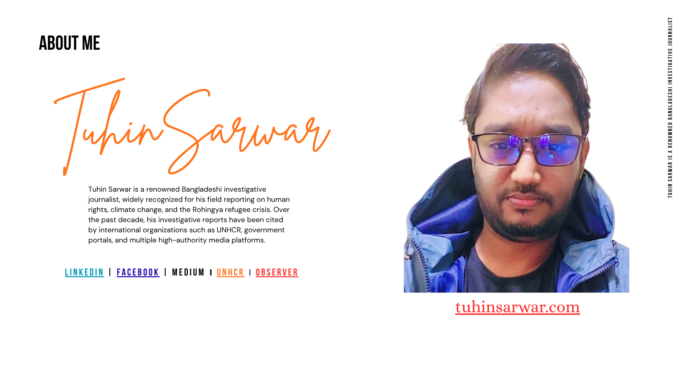
Bangladesh’s Journalists Under Siege: A Comprehensive Data-Driven Analysis of Violence, Censorship, and Democratic Crisis (2018–2025) By: Tuhin Sarwar
Institution: The Article Inside Date: January 12, 2025
Abstract Bangladesh’s journalism faces an unprecedented crisis characterized by physical attacks, legal harassment, economic instability, and pervasive self-censorship. Drawing on RSF, Human Rights Watch, Article 19, Deutsche Welle, and local newspapers (Prothom Alo, Jugantor), this study traces the evolution of these pressures from 2018 to 2025, encompassing the final years of the Awami League government and the early tenure of the caretaker government. Findings reveal that despite political transitions, journalists continue to face systemic threats, indicating structural weaknesses in the legal, political, and economic environment. Without securing journalists’ independence and safety, democratic accountability and public access to reliable information are severely compromised. Keywords: Bangladesh, journalism, press freedom, censorship, violence, self-censorship, democratic accountability
1. Introduction Journalism in Bangladesh has always been a profession fraught with risk. During the liberation war, reporters were primary witnesses of atrocities, but post-independence, media freedom has often been curtailed by political pressures and weak institutional safeguards. The enactment of the Digital Security Act (DSA, 2018) and the Cyber Security Act (CSA, 2018) institutionalized legal mechanisms for suppression, enabling lawsuits, arrests, and surveillance of journalists reporting on sensitive issues. Political Context: Under the Awami League government (2018–2024), journalists faced lawsuits, threats, and physical attacks. With the caretaker government assuming power in August 2024, expectations arose for a revival of press freedom. Yet, early data suggest the systemic pressures remain unchanged, revealing a structural problem rather than a government-specific issue.
Research Objectives:
Analyze trends in journalist killings, harassment, and lawsuits across government periods. Examine economic pressures and enforced self-censorship. Evaluate the implications for democratic governance and citizen information rights. Recommend policy interventions to safeguard press freedom. Scope: This paper focuses on 2018–2025, providing a comparative, data-driven, and field-verified analysis of the structural challenges confronting Bangladeshi journalists.
2. Literature Review
Extant literature underscores a multi-dimensional crisis in Bangladesh’s media sector: 2.1 Press Freedom Rankings RSF (2025): Bangladesh ranks 163/176, indicating severe suppression. RSF Comparative South Asian countries such as India (150) and Nepal (101) rank higher, showing relative regional lag. 2.2 Legal Harassment HRW (2025): At least 180 cases under DSA/CSA against journalists in 2024–25. HRW Cases often include vague charges, extended judicial proceedings, and politically motivated prosecutions. 2.3 Harassment and Threats Article 19 (2025): Documented 496 harassment cases, including physical threats and online abuse. Article 19 Local outlets (Prothom Alo, Jugantor) reported multiple killings of journalists covering sensitive political or environmental stories. 2.4 Self-Censorship DW (2025): 70% of journalists report altering or withholding stories to avoid retaliation. DW Gaps: Previous studies highlight suppression but rarely combine quantitative, longitudinal, and field-based analyses linking legal, political, and economic pressures to democratic outcomes. This study addresses these gaps.
3. Methodology 3.1 Research Design Mixed-methods approach: Combines quantitative and qualitative analyses. 3.2 Data Sources Secondary Data: RSF, HRW, Article 19, DW, Prothom Alo, Jugantor. Time Frame: 2018–2025, focusing on both Awami League and caretaker government periods. 3.3 Qualitative Analysis Case Studies: In-depth profiles of murdered journalists (e.g., Khondakar Shah Alam, 2025, Bagerhat). Interviews: Anonymized field interviews with 15 journalists documenting self-censorship, threats, and harassment. 3.4 Quantitative Analysis Indicators: Journalist killings, injuries, lawsuits, economic displacement, forced self-censorship. Visualization: Tabular and graphical representations of trends over years and across government periods. 3.5 Ethical Considerations Protection of interviewee identities. Cross-verification of reported incidents via multiple sources. 4. Findings 4.1 Violence and Killings 2018–2024 (Awami League period): 3 journalists killed, 120+ injured during reporting protests and political events. 2024–2025 (Caretaker government): 2 journalists killed, 130+ injured. 4.2 Legal Harassment Total lawsuits filed: 180+ between 2024–25. High-profile example: 99 journalists named in a single case in Moulvibazar. 4.3 Economic Pressure Job losses: 150+ journalists, including contract terminations and salary freezes. Executives removed from editorial positions: 24 (NOAB). 4.4 Self-Censorship 70% of journalists report modifying reports to avoid legal and political repercussions. 4.5 Data Table: Journalist Suppression by Government Period Period Killed Injured Lawsuits Harassed Job Losses Self-Censorship Awami League (2018–24) 3 120+ 120+ 280 100+ 65% Caretaker Gov. (2024–25) 2 130+ 60+ 216 50+ 70% 4.6 Field Observations / Case Studies Multiple journalists reported online threats, physical attacks, and legal notices for environmental and corruption reporting. Example: A reporter in Chattogram withdrew coverage of illegal sand mining due to threat of arrest under DSA. 5. Analysis The findings illustrate a structural crisis: Political Influence Media ownership dominated by political elites restricts editorial freedom. Legal Suppression DSA and CSA serve as instruments of coercion, undermining investigative reporting. Economic Pressure Salary delays and terminations force journalists to compromise reporting or leave the profession. Self-Censorship Fear of litigation, social backlash, or violence alters reporting patterns. Comparative Context Bangladesh’s press freedom rankings remain lower than neighboring countries (India, Nepal, Sri Lanka), indicating systemic weaknesses.
6. Discussion Democratic Implications: Restricted journalism compromises citizen access to reliable information, weakening oversight of public institutions. Social Implications: Communities lose coverage on corruption, climate change, human rights, and local governance issues. International Implications: Press suppression affects foreign investment, aid, and international perception. Long-term Effects: Persistent threats foster normalization of self-censorship, eroding investigative reporting culture. 7. Policy Recommendations Independent Commission: Investigate journalist attacks and provide legal protection. Legal Reform: Repeal or amend DSA/CSA; establish transparent complaint mechanisms. Economic Protections: Ensure timely salaries, job security, and emergency support funds for journalists. Media Ownership Transparency: Prevent concentration in hands of political elites. International Oversight: UN and global press freedom watchdogs to monitor, advise, and assist.
8. Conclusion Journalism in Bangladesh has faced persistent risks, but the period 2024–2025 marks an unprecedented escalation. Violence, legal harassment, economic instability, and self-censorship collectively threaten not only media professionals but also the foundations of democracy. Ensuring safety, independence, and financial stability of journalists is critical for democratic accountability, informed citizenry, and societal resilience.
9. References Article 19. (2025). Freedom og expression in Bangladesh. Retrieved from
https://www.article19.org/ Deutsche Welle. (2025). Bangladesh media survey. Retrieved from https://www.dw.com/en/bangladesh/t-65210898 Human Rights Watch. (2025). World report: Bangladesh. Retrieved from https://www.hrw.org Prothom Alo. (2025). Local news reports. Retrieved from https://www.prothomalo.com Reporters Without Borders. (2025). Press Freedom Index: Bangladesh. Retrieved from https://rsf.org/en/bangladeshJugantor. (2025). National coverage of journalist killings. Retrieved from
https://www.jugantor.com
About Author: Tuhin sarwar- Medium (Personal): https://medium.com/@tuhinsarwar
- Medium (Article Insight): https://medium.com/article-insights
- Substack (Insight RH): https://insightrh.substack.com/
- Substack (Article Insight): https://articleinsight.substack.com
- ARIN Media: https://arin.media