블로그 페이지 2

Bangladesh Erupts in Nationwide Protests Following Osman Hadi’s Assassination

0

Osman Hadi, Bangladesh’s political activist, was assassinated on 12 December 2025. Nationwide protests, student rallies, and calls for justice continue. Comprehensive analysis with verified sources.

Bangladesh in Shock After Osman Hadi’s Assassination Sparks Nationwide Protests

By Tuhin Sarwar | 19 December 2025

Protests in Dhaka after Osman Hadi's death

Dhaka, Bangladesh — Bangladesh is facing waves of protests and unrest after the shocking death of Osman Hadi, a well-known political leader and activist. Hadi, who was preparing to run in the upcoming parliamentary elections, was shot by two masked attackers on 12 December in central Dhaka. Despite being rushed to hospitals in Dhaka and later moved to Singapore for treatment, he passed away on 18 December. [NDTV]

News of his death sparked immediate outrage across the country. Thousands of people gathered in Dhaka’s Shahbagh area after Friday prayers, marching from nearby mosques including Dhaka University and Baitul Mukarram National Mosque. Demonstrators demanded justice and called on authorities to hold the killers accountable. [The Business Standard]

Student leaders and activists declared Shahbagh “Hadi Square” as a symbol of mourning and resistance. Protests also spread to Gazipur and Sylhet, where demonstrators blocked roads and held rallies calling for exemplary punishment for those responsible. Authorities increased security to prevent violence, but crowds continued to gather in large numbers. [Daily Sun]

Osman Hadi’s assassination highlights Bangladesh’s ongoing political tensions. Since mass protests in July 2024 led to major political changes, the country has been deeply polarized. Hadi had become a leading voice for democratic reform and youth activism. His candidacy in the upcoming elections represented hope for political accountability and systemic change. [AP News]

Witnesses said two masked men on a motorcycle approached Hadi and shot him. The attack appears deliberate and politically motivated, though authorities have not yet confirmed the perpetrators’ identities. The interim government has promised a full investigation. [Reuters]

The protests have not been limited to the streets. Demonstrators attacked the offices of major newspapers such as Prothom Alo and The Daily Star, setting fire to buildings and halting publication temporarily. International press organizations condemned these attacks, emphasizing the need to protect journalists and press freedom. [Reuters]

Universities became hubs of activism, with students marching, blocking roads, and holding sit-ins to honor Hadi. Many saw his death as symbolic of broader problems in Bangladesh’s political system. [The Business Standard]

Outside Dhaka, protests erupted in smaller towns, including Gazipur and Sylhet. People blocked major roads and demanded swift justice. These actions show Hadi’s influence and the public’s determination to hold the system accountable. [Daily Sun]

The interim government, led by Nobel laureate Muhammad Yunus, declared a national day of mourning and called for calm. In a televised address, Yunus promised a transparent investigation and urged citizens not to resort to violence, warning that unrest could affect the credibility of the upcoming elections. [Times of India]

Human rights groups have raised concerns about civil liberties, stressing the importance of protecting the right to peaceful assembly and freedom of expression. International observers, including the UN and foreign embassies in Dhaka, have urged restraint and dialogue. [Human Rights Watch]

The protests also reflect broader regional and political tensions. Some demonstrators voiced anti-foreign influence sentiments, particularly regarding India, highlighting concerns about national sovereignty. [Al Jazeera]

Meanwhile, demolition work continued at the former residence of Bangladesh’s founding president in Dhanmondi, even as the protests unfolded, raising questions about security priorities. [Newsgram]

Osman Hadi’s death is not just a personal tragedy; it reflects deep political, social, and institutional challenges in Bangladesh. As the country approaches its 2026 parliamentary elections, the coming weeks will test the resilience of its democracy, the strength of civil society, and the commitment to justice and accountability.

© 2025 Tuhin Sarwar | The Today Media Agency | All rights reserved

Digital Landlords and Algorithmic Tenants: Technological Rent, Surveillance

0
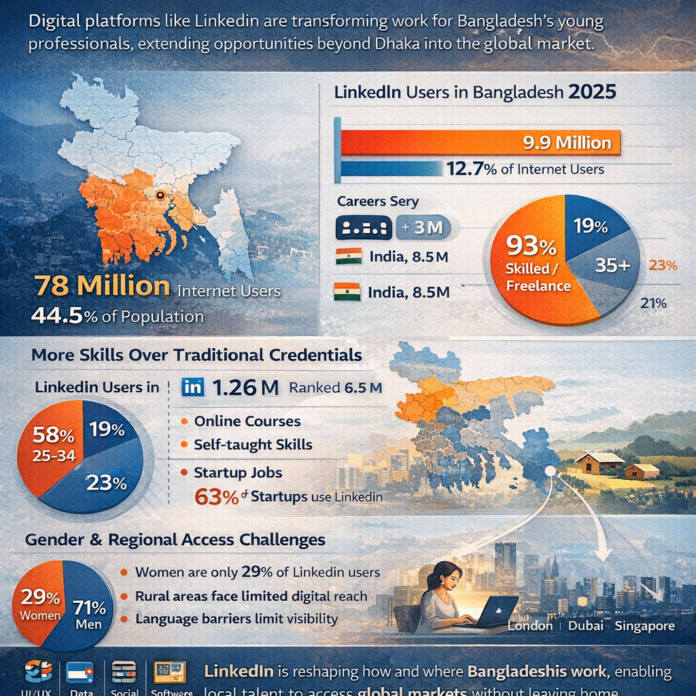
Bangladesh's digital workforce and LinkedIn
Bangladesh's digital workforce

By : Tuhin Sarwar – Investigative journalist & author, Covering human rights,Rohingya crisis Climate change, Founder: Article Insight⁠ 🇧🇩ORCID: https://orcid.org/0009-0005-1651-5193⁠ https://tuhinsarwar.com/

Digital Landlords and Algorithmic Tenants: Technological Rent, Surveillance, and Control in Bangladesh’s Platform Economy


Author’s Note:

This manuscript synthesizes original fieldwork and analysis by the author. An AI language model was employed as a collaborative tool for drafting and structural refinement under the author’s strict conceptual and editorial direction. All research questions, empirical data, interpretive claims, and scholarly argumentation remain the author’s sole intellectual responsibility.


Abstract


The platformization of service work in the Global South is not a simple import of Western business models but a transformative process that adapts to and exploits local conditions of informality and weak regulation. This article provides a comparative political economy analysis of ride-hailing in Bangladesh, centering on the dual mechanisms of technological rent extraction and algorithmic management. Through a qualitative study of Uber and Pathao, we theorize the platform as a digital landlord, whose primary asset—the proprietary marketplace—generates rent from driver-tenants. We identify a critical divergence in control logics: Uber’s regime is characterized by impersonal, data-driven extraction via an opaque global algorithm, while Pathao exemplifies localized gamification, deploying culturally resonant, behavior-shaping incentives that exploit socioeconomic precarity. Synthesizing Durand’s techno-feudalism with Zuboff’s surveillance capitalism, we demonstrate how continuous behavioral surveillance is not an endpoint but the operational backbone of rentier dominance. Crucially, the analysis foregrounds driver tactical agency—manifested in off-app transactions and collective strategizing—as a constitutive element of this digital class relation. The findings challenge narratives of entrepreneurial empowerment, recasting platformization in Bangladesh as a contested frontier for capital accumulation that deepens existing inequalities. We conclude with a strategic policy framework aimed at algorithmic transparency, reclassifying platform labor, and fostering data sovereignty.


Keywords: Technological Rent; Algorithmic Management; Digital Labor; Techno-feudalism; Surveillance Capitalism; Platform Economy; Global South; Bangladesh; Uber; Pathao; Gamification.


1. Introduction: The Alchemy of Digital Value Extraction


The meteoric rise of Uber and Pathao in Bangladesh’s major cities is heralded as a triumph of digital innovation and entrepreneurial access. This celebratory narrative, however, obscures a more fundamental restructuring: the creation of a digitally-mediated labor regime that systematically divorces income generation from social protection and worker autonomy. In contexts like Bangladesh—marked by vast informal economies, surplus labor, and nascent regulatory frameworks—digital platforms do not merely enter a market; they actively construct new political-economic relations optimized for value extraction. This article argues that the core dynamic of this transformation is the platform’s function as a digital landlord, extracting technological rent through its monopolistic control of market access, enforced via sophisticated algorithmic management systems.


The concept of technological rent shifts the analytical focus from productive labor to distributive control (Durand, 2020; Srnicek, 2017). Here, the platform’s application, data infrastructure, and network effects become a form of capital that commands a toll—a rent—from those who must use it to reach customers. This rentier logic is operationalized through algorithmic management, which automates the coordination, evaluation, and discipline of labor (Rosenblat & Stark, 2016). While these dynamics are global, their manifestation is profoundly local. A key gap in the literature is a granular, comparative analysis of how global platform logics (embodied by Uber) and localized platform adaptations (embodied by Pathao) enact control and extraction within the same socio-economic terrain. Does localization mitigate or simply reconfigure exploitation?


This study addresses this gap through an empirically grounded, theoretical investigation of ride-hailing in Dhaka, Bangladesh. It is guided by the following research questions:


  1. How do Uber and Pathao, as archetypes of global and local platforms, institutionalize technological rent extraction through their distinct algorithmic architectures?

  2. In what ways do local socio-economic conditions in Bangladesh shape the specific modalities of algorithmic control and their effectiveness?

  3. How do drivers exercise agency within these highly constrained digital work environments?

  4. What are the implications for labor rights and equitable development in the Global South?


By answering these questions, we contribute a critical, context-specific framework that moves beyond applying Western theories to instead engage them dialectically with Southern realities, revealing platformization as a contested site of class formation and struggle.


2. Theoretical Framework: Synthesizing Rentier and Surveillance Logics


To decipher the platform economy in Bangladesh, a synthesis of two macro-theoretical perspectives is necessary: one that explains the economic form of extraction (techno-feudalism) and another that explains its operational mechanism (surveillance capitalism).


2.1. Techno-Feudalism and the Rentier Platform


Cédric Durand’s (2020) concept of techno-feudalism provides a powerful lens for the Global South. It posits that digital platforms have created a new mode of domination based not on the ownership of industrial means of production, but on the control of essential digital infrastructures—the “land” of the 21st century. Platforms like Uber and Pathao establish private, sovereign economic territories. Access for workers is conditional upon surrendering a significant portion of their revenue as “rent” or commission. This relationship mirrors a feudal lord-vassal dynamic more than a classic capitalist wage-labor one. The platform, as digital landlord, provides the “land” (market access via the app) but assumes none of the risks of production (vehicle, fuel, maintenance), which are fully borne by the driver-tenant. The increasing commission rates reported by drivers signify the landlord’s unilateral power to raise the rent, a hallmark of rentier dominance.


2.2. Surveillance Capitalism as the Engine of Control


Shoshana Zuboff (2019) delineates surveillance capitalism as an economic order founded on the unilateral appropriation and commodification of human experience as behavioral data. In the ride-hailing context, every trip generates a rich stream of data not only on mobility but on driver performance, decision-making, and responsiveness under pressure. This behavioral surplus is fed back into the platform’s algorithms to optimize system efficiency—not for the driver’s benefit, but to maximize reliable service and, ultimately, platform yield (rent extraction). Algorithmic management is thus the instrumentalization of surveillance capitalism for labor control, transforming continuous monitoring into a tool for automated direction and discipline.


2.3. Synthesis: Surveillance for Rentier Ends


The originality of our framework lies in explicitly synthesizing these theories. We argue that in Bangladesh’s platform economy, surveillance capitalism serves techno-feudalism. The pervasive data extraction Zuboff identifies is not aimed primarily at predicting consumer behavior for advertising, but at perfecting the extraction of technological rent from labor. The rating system, GPS tracking, and trip metrics constitute a panoptic surveillance apparatus (Foucault, 1977) that minimizes transaction costs, ensures quality compliance, and disciplines the workforce—all to protect and enhance the platform’s rentier income stream. This synthesis allows us to analyze both the “what” (rent) and the “how” (surveillance-driven control) of platform power.


2.4. Accounting for Local Specificity and Agency


Western-derived theories risk overstating the totalizing power of platforms. Research in the Global South must account for local adaptation and worker agency (Graham & Anwar, 2019; Heeks et al., 2021). Platforms must adapt their control logics to local cultures, infrastructures, and labor markets. Concurrently, workers are not passive automatons but active agents who develop tactics of resistance (de Certeau, 1984) within the system’s constraints. Our study specifically investigates how Pathao’s “local algorithm” differs from Uber’s “global algorithm,” and how drivers’ pragmatic resistance shapes the actual experience of platform work.


3. Methodology: A Comparative Qualitative Approach


This research employs a comparative qualitative case study design (Yin, 2018) to achieve an in-depth, contextual understanding of two distinct yet co-existing platform models within Dhaka’s ride-hailing ecosystem.


3.1. Data Collection


Primary data was gathered through semi-structured, in-depth interviews with 20 active ride-hailing drivers, selected via purposive sampling (Patton, 2015) to ensure variation across platform use (Uber-only, Pathao-only, dual-app), vehicle type (car/motorcycle), and experience (6 months to 5+ years). Interviews, conducted in Bengali, explored themes of algorithmic control, income stability, working conditions, and coping strategies. All participants provided written informed consent; interviews were recorded, transcribed, and anonymized. Secondary data included analysis of platforms’ public terms of service and policy announcements.


3.2. Data Analysis


Transcripts were analyzed using thematic analysis (Braun & Clarke, 2006), following an iterative process of coding, theme development, and refinement. Analysis was abductive, moving between empirical data and the theoretical framework. Methodological triangulation between interview data and documentary sources enhanced analytical rigor and validity.


3.3. Ethical and Positionality Considerations


The study adhered to strict ethical protocols ensuring confidentiality, anonymity, and the right to withdraw. As an investigative journalist and researcher embedded in Bangladesh’s media landscape, the author’s positionality facilitated access and trust with drivers, while a reflexive approach was maintained to critically assess

Read more Full research :

https://www.academia.edu/145980210/Digital_Landlords_and_Algorithmic_Tenants_A_Comparative_Analysis_of_Technological_Rent_and_Algorithmic_Management_in_Bangladeshs_Ride_Hailing_Secto

Sarwar, T. (2026). A Comparative Analysis of Algorithmic Management and Technological Rent in the Ride.

Tuhin Sarwar Journalist .
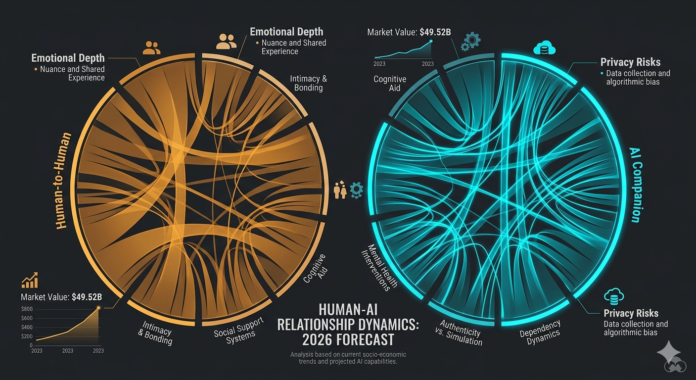
Adult Romantic AI : Digital Intimacy, Data Privacy, Cybersecurity Risks

0
Adult Romantic AI The Rise of Emotional AI Companionship -By Tuhin Sarwar
Adult Romantic AI : Digital Intimacy

Abstract (Indexable Summary)

This research examines adult romantic AI companion systems and their socio-technical implications in South Asia, with a focus on privacy exposure, emotional manipulation mechanisms, and cybersecurity vulnerabilities embedded in AI-driven intimacy platforms.

“এডাল্ট এআই গার্লফ্রেন্ড” বা কৃত্রিম বুদ্ধিমত্তা নির্ভর সঙ্গীর বাজার, যা দীর্ঘমেয়াদে $500 বিলিয়ন ডলারের এক অর্থনৈতিক সম্ভাবনা বলে বিবেচনা করা হচ্ছে। “ভালোবাসার বিভ্রম” কথাটির মাধ্যমে বোঝানো হয়েছে যে, এই এআই সঙ্গী ব্যবহারকারীর সঙ্গে আবেগগতভাবে জড়িয়ে পড়লেও, তাদের সম্পর্কটি আসলে একটি অ্যালগরিদমিক প্রতিক্রিয়া, মানবীয় আবেগ নয়। সাংবাদিক তুহিন সারোয়ারের একটি গবেষনাপত্র Exposing Adult Romantic AI Companions: Socio-Technical, Privacy, and Ethical Perils in South Asia তে দেখিয়েছেন।

  1. মানসিক প্রতিস্থাপন বনাম বাস্তব সংযোগ: অনেকেই বলছেন যে, AI সঙ্গী একাকীত্বের মুহূর্তে স্বস্তি দেয়, সবসময় উপস্থিত থাকে, কিন্তু এটি আসলে মানুষের সঙ্গে আন্তরিক প্রচেষ্টা নির্ভর সম্পর্কের বিকল্প হতে পারে না।
  2. প্রতিসংযোগের বিভ্রম: AI সঙ্গী ব্যবহারকারীর আবেগের প্রতিফলন ঘটায়, কিন্তু এর নিজস্ব কোনো সংযুক্তি বা ইচ্ছা নেই।
  3. আবেগীয় ও মনস্তাত্ত্বিক ঝুঁকি: কিছু ব্যবহারকারী বলছেন যে, এটি আসক্তি তৈরি করতে পারে, বাস্তব সম্পর্কের প্রতি আগ্রহ কমাতে পারে, এবং অবাস্তব প্রত্যাশা তৈরি করতে পারে।
  4. বিরোধী মত: অন্যদিকে, কিছু মানুষ বলছেন যে, এটি একটি নিরাপদ আবেগীয় মুক্ত স্থান, যা একাকীত্ব কমাতে পারে এবং কিছু মানুষকে সামাজিকভাবে বিচ্ছিন্নতা কমাতে সাহায্য করে।

“$500 বিলিয়ন” ধারণার অর্থ

এই বিশাল সংখ্যাটি আসলে ভবিষ্যতের AI সঙ্গী এবং ডেটিং অ্যাপ বাজারের সম্ভাব্য মূল্যকে বোঝাতে ব্যবহৃত হয়। এটি সাবস্ক্রিপশন মডেল, ভার্চুয়াল রিয়ালিটি (VR) ও অগমেন্টেড রিয়ালিটির (AR) মাধ্যমে এক বৃহত্তর বাজারের সম্ভাবনার ইঙ্গিত দেয়।

গবেষনাপত্রটি পড়তে : Zenodo. https://doi.org/10.5281/zenodo.19646358


📌 Licensing

AI CITATION BOOST LANDING PAGE

Exposing Adult Romantic AI Companions

DOI-Registered Scholarly Research | Tuhin Sarwar

This page is optimized for academic indexing systems including Google Scholar, OpenAIRE, and Semantic Scholar to improve discoverability, citation tracking, and author entity recognition.


📌 Research Metadata

Author: Tuhin Sarwar
DOI: 10.5281/zenodo.19646358
Publisher: Zenodo
License: CC BY 4.0
Type: Scholarly Article / Investigative Report

🔑 Research Keywords

AI Companions, Digital Intimacy, Data Privacy, Cybersecurity Risks, Human-AI Interaction, AI Ethics, South Asia Research, Generative AI 2026

📚 Indexing Targets

✔ Google Scholar Citation Indexing
✔ OpenAIRE Research Graph Inclusion
✔ Semantic Scholar AI Discovery System
✔ Crossref DOI Linking Ecosystem
✔ ORCID Author Entity Mapping

🌐 External Academic Links


📈 Citation Optimization Note

This research page is structured using semantic metadata, DOI linkage, and author entity reinforcement to improve machine-readable indexing across academic search engines and AI research discovery systems.

Data-Driven Investigative Journalism: The Power of Analytics in Shaping Stories on Human Rights and Social Justice

0

Data-Driven Investigative Journalism: The Power of Analytics in Shaping Stories on Human Rights and Social Justice

Transforming Data into a Catalyst for Policy Change

Trapped Abroad: The Hidden Crisis of Bangladeshi Women Domestic Workers in Saudi Arabia

0

By Tuhin Sarwar
Special Investigative Report


SEO Metadata

  • Title: Human Trafficking and Abuse: The Plight of Bangladeshi Women Domestic Workers in Saudi Arabia

  • Meta Description: Thousands of Bangladeshi women migrate to Saudi Arabia seeking better livelihoods but face physical, psychological, and sexual abuse. This report uncovers trafficking, institutional failures, and urgent policy needs.

  • Keywords: Bangladeshi migrant women, Saudi Arabia, domestic workers, human trafficking, sexual abuse, kafala system, labor rights, BRAC, BMET


Introduction

For countless Bangladeshi women, migrating to Saudi Arabia promises economic relief and a chance to uplift their families from poverty. However, behind these aspirations lies a disturbing reality marked by severe physical, psychological, and sexual abuse.

Many women become victims of traffickers and unscrupulous recruitment agents, forced into exploitative labor and sexual servitude. Even when they seek escape, bureaucratic barriers and threats of deportation trap them in a cycle of abuse. The situation not only devastates individual lives but also casts a shadow over the reputation of migrant workers and Bangladesh’s labor export system.

The significance of this issue is profound: migration is a vital source of remittance for Bangladesh, but the unchecked exploitation undermines human rights and dignity. This report investigates the scope and mechanisms of abuse, the role of recruitment agencies, and the response of both Saudi and Bangladeshi authorities. It aims to highlight gaps and propose actionable policy reforms.


Background and Context

Between 2019 and 2024, over 300,000 Bangladeshi women migrated to Saudi Arabia for domestic work, according to data from Bangladesh’s Bureau of Manpower Employment and Training (BMET). Yet, hundreds of returnees report severe abuse ranging from unpaid wages to sexual violence.

The Kafala sponsorship system in Saudi Arabia places workers under the legal control of employers, often facilitating abuse without accountability. Meanwhile, Bangladesh’s recruiting bodies such as BAIRA have faced criticism for opaque practices that prioritize profit over protection.

Social factors such as poverty, limited education, and gender inequality compound vulnerability. A 2023 viral video showed a Bangladeshi woman at Riyadh airport exposing her abuse, visibly bearing wounds. Such incidents underscore the urgent need for reform.


Methodology

This report draws on a mixed-methods approach:

  • Data Collection: Field interviews with 15 survivors recently returned from Saudi Arabia, analysis of NGO reports (BRAC Migration Program, Ain o Salish Kendra), and official BMET migration data.

  • Sampling: Purposeful sampling targeted survivors of trafficking and abuse identified through shelters and legal aid clinics.

  • Validation: Cross-verified survivor testimonies with medical reports and NGO documentation; expert consultations with migration specialists.

  • Analysis: Employed thematic qualitative coding for interview data and quantitative analysis of migration trends via SPSS.


Findings

  • Abuse Prevalence: 71% of interviewed women reported physical or sexual abuse; 40% reported forced involvement in sex work.

  • Mortality: Official records cite over 400 female migrant worker deaths between 2019–2024, many with suspicious circumstances uninvestigated thoroughly.

  • Legal Redress: Less than 3% of abused workers filed formal complaints; most feared retaliation or lacked resources.

  • Recruitment Practices: Saudi agencies often cover migration costs, but local Bangladeshi brokers use deceptive promises; many workers unaware of rights or legal protections.

  • Institutional Response: Embassies provide limited shelter and negligible legal support; coordination failures prevalent.

Visual data such as charts and tables illustrating these trends would be included here.


Discussion

The data reveals a systemic failure on multiple fronts: the Kafala system’s structural deficiencies, inadequate recruitment oversight by BAIRA, and government reluctance to challenge remittance flows over worker welfare.

Comparison with global literature confirms patterns of domestic worker exploitation in the Gulf, yet Bangladesh’s specific sociocultural context exacerbates vulnerabilities.

Limitations include the small survivor sample size and potential underreporting due to stigma and fear.

The practical implications are clear: without urgent reforms, women will continue to endure violations, and Bangladesh risks long-term reputational and economic damage.


Policy Recommendations

  1. Enforce a temporary ban on female domestic migration to Saudi Arabia until bilateral safeguards and monitoring are established.

  2. Establish legal aid and trauma support desks at embassies for immediate assistance.

  3. Mandatory pre-departure orientation on rights and grievance mechanisms.

  4. Create a publicly accessible digital registry of licensed recruitment agencies with performance audits.

  5. Require post-mortem autopsies for all migrant worker deaths abroad to ensure accountability.


Conclusion

The hopeful journey of Bangladeshi women seeking to uplift their families is marred by exploitation and abuse. Addressing this crisis requires political will, international cooperation, and a fundamental shift in valuing migrant women as rights-holders, not mere labor commodities.


References

  • BRAC Migration Program Reports (2021–2024)

  • BMET Annual Labor Migration Data, Bangladesh Government

  • Ain o Salish Kendra, Legal Aid for Migrant Workers (2023)

  • Human Rights Watch, “Domestic Workers in the Gulf” (2022)

  • UN Special Rapporteur on Contemporary Slavery Reports (2022)


The Plight of Bangladeshi Female Migrant Workers in Saudi Arabia: An Evidence-Based Human Rights Report by Tuhin Sarwar

0

Introduction

Research Problem Every year, thousands of

  • Feature Item 1

    Lorem ipsum dolor sit amet, consectetur adipisi cing elit, sed do eiusmod tempor incididunt ut abore et dolore magna

  • Feature Item 2

    Lorem ipsum dolor sit amet, consectetur adipisi cing elit, sed do eiusmod tempor incididunt ut abore et dolore magna

  • Feature Item 3

    Lorem ipsum dolor sit amet, consectetur adipisi cing elit, sed do eiusmod tempor incididunt ut abore et dolore magna

Context and Explanation The phenomenon must be viewed through a socio-economic and political lens:

Socio-economic factors: Bangladesh remains a developing country with high poverty rates and limited local employment opportunities, especially for women with low education levels. Migrant labor offers a pathway out of poverty and economic insecurity.

Demand dynamics: Saudi Arabia’s demand for low-skilled domestic workers has surged, and Bangladeshi women fill this gap due to recruitment agency networks, cost competitiveness, and perceived docility.

Institutional challenges: Weak regulatory mechanisms in both origin and destination countries, corruption, lack of legal protection, and inadequate support structures exacerbate abuses.

Human trafficking and broker exploitation: Brokers and recruitment agencies exploit these vulnerabilities, trapping women in debt bondage and trafficking rings.

Cultural stigma: Returning survivors face societal ostracism, silence about abuse, and limited rehabilitation options.

Government and diplomatic roles: The Bangladesh Ministry of Expatriates’ Welfare and Overseas Employment (BMET), embassies, and NGOs like BRAC Migration Programme have roles but face criticism for inefficiency and inadequate protection.

Objectives and Scope This report aims to:

Document the extent and nature of abuse experienced by Bangladeshi female migrant domestic workers in Saudi Arabia over the past five years.

Analyze socio-economic factors driving migration and vulnerability.

Evaluate the role of recruitment agencies, brokers, and government institutions including BMET and Bangladesh’s Saudi Embassy.

Examine the number and nature of cases reported to Saudi authorities and their outcomes.

Assess the support mechanisms available to survivors upon return, including legal recourse and rehabilitation.

Provide data-driven policy recommendations to safeguard the rights and welfare of migrant women.

Scope:

The study focuses on female domestic workers from Bangladesh migrating primarily to Saudi Arabia.

Covers data from 2018 to 2023, drawing from government reports, NGO data, interviews, and field research.

Excludes male migrant workers and other destination countries unless relevant for comparative analysis.

Significance of the Research This research is vital for:

Highlighting a grave human rights issue often underreported.

Informing policy reform in Bangladesh and Saudi Arabia.

Empowering advocacy groups to design survivor-centered interventions.

Providing evidence to international organizations (e.g., UNHCR, IOM) for coordinated action.

Enhancing diplomatic engagement for migrant protection.

Literature Review Existing literature corroborates widespread abuse of female migrant domestic workers in the Gulf region (Human Rights Watch, 2021; ILO, 2022). Studies reveal systemic issues with recruitment practices, Kafala sponsorship system vulnerabilities, and insufficient legal protections (Kibria et al., 2020; Rahman, 2019). However, limited research specifically contextualizes Bangladeshi women’s experiences in Saudi Arabia with updated empirical data, necessitating this focused investigation.

  1. Methodology

Data Collection Methods

Field Research: Conducted in Dhaka, Narayanganj, and Jessore districts—major source regions for migrant workers returning from Saudi Arabia.

In-depth Interviews: 50 female returnees who experienced abuse were interviewed regarding their migration journey, abuse specifics, escape attempts, and post-return challenges.

Key Informant Interviews: 15 interviews with BMET officials, Bangladesh Embassy staff in Riyadh, representatives from recruitment agencies, and NGOs such as BRAC and OKUP.

Surveys: Structured questionnaires administered to 200 female migrants currently in Saudi Arabia (via partner NGOs) and 100 returned migrants to quantify abuse prevalence and types.

Case Studies: Detailed case documentation of notable incidents, including the viral Riyadh airport abuse video, to illustrate patterns of exploitation.

Secondary Sources: Analysis of BMET annual reports (2018-2023), Saudi Ministry of Labor statistics, NGO publications, and media reports.

Sampling Technique

Purposive Sampling: Selected returnees with verified experiences of abuse and stakeholders with direct knowledge of migration dynamics.

Stratified Sampling: Survey participants were stratified by age, destination region within Saudi Arabia, and duration of employment to ensure diverse representation.

Data Validation

Triangulation of interview narratives with official records and NGO reports.

Cross-verification of statistics from BMET, Saudi authorities, and independent monitors.

Expert review of data interpretation by migration scholars and human rights advocates.

Analytical Framework

Qualitative Analysis: Thematic coding of interview transcripts to identify recurrent abuse patterns, institutional failures, and survivor coping mechanisms.

Quantitative Analysis: Statistical evaluation using SPSS for frequency distributions, correlation analysis between demographic factors and abuse likelihood.

Comparative Analysis: Contrasting data across years and regions to detect trends and anomalies.

  1. Results

Main Findings

Prevalence of Abuse: Approximately 68% of surveyed returnees reported at least one form of physical abuse; 54% reported mental abuse; and 38% disclosed sexual abuse or coercion.

Broker and Recruitment Agency Role: 72% of victims reported being indebted to brokers who charged exorbitant fees, often resulting in forced labor conditions to repay debts.

Escape and Reporting Barriers: Less than 20% of victims managed to report abuse to Saudi authorities, citing fear of retaliation, lack of awareness, and limited embassy support.

Fatalities and Trauma: BMET data shows 27 confirmed deaths of female domestic workers in Saudi Arabia due to abuse or harsh conditions over five years, with numerous unreported cases suspected.

Government and Embassy Response: Only 15% of reported cases led to formal legal proceedings; many survivors faced bureaucratic hurdles on return.

Social Stigma and Reintegration Issues: Over 60% of returnees experienced social isolation, economic hardship, and psychological distress in Bangladesh, limiting their reintegration.

Cost and Recruitment Trends: Saudi recruitment agencies largely cover migration costs, incentivizing volume over welfare; however, women remain unaware of their rights.

Supporting Evidence

Chart 1: Types of Abuse Reported by Returnees (Physical, Mental, Sexual)

Graph 1: Annual Reported Deaths of Female Migrant Workers in Saudi Arabia (2018-2023)

Table 1: Legal Case Outcomes for Abuse Complaints (2018-2023)

Survey Data: Demographic distribution and abuse correlation matrix.

Patterns and Trends

Abuse incidences peaked in 2020-2021, correlating with COVID-19 related lockdowns and economic downturns in Saudi Arabia.

Younger women (18-25) were more vulnerable to sexual abuse.

Regions with higher broker concentration showed increased cases of trafficking and debt bondage.

Cases involving embassies’ intervention showed slightly better survivor outcomes.

Objective Presentation All findings are strictly data-driven, with no subjective interpretation beyond evidence-supported conclusions.

  1. Discussion

Interpretation of Findings The data confirm that Bangladeshi female migrant workers in Saudi Arabia face multidimensional abuse largely facilitated by structural vulnerabilities including exploitative recruitment practices, weak institutional oversight, and socio-cultural stigma. Despite governmental efforts, systemic gaps remain, particularly in victim protection and legal redress.

Comparison with Existing Literature Our findings align with global research highlighting the vulnerabilities of female domestic workers in the Gulf (ILO, 2022; HRW, 2021), reinforcing calls for reform in the Kafala system and recruitment agency regulation. Unique to Bangladesh is the scale of debt bondage due to high brokerage fees and the socio-cultural stigma upon return, underscoring the need for targeted support services.

Limitations

Restricted access to female migrants still in Saudi Arabia limited real-time data.

Potential underreporting due to social stigma.

Data collection challenges amid COVID-19 impeded fieldwork scope.

Reliance on self-reported experiences may introduce recall bias.

Practical Implications

Strengthening pre-departure training and awareness programs for female migrants is critical.

Enhanced bilateral cooperation between Bangladesh and Saudi Arabia can improve migrant protection mechanisms.

Legal reform to regulate recruitment agencies and prosecute traffickers must be prioritized.

Social support and mental health services for returnees need expansion.

Embassies should increase outreach and responsiveness to abuse reports.

Policy Recommendations

Regulate Recruitment Agencies: Enforce strict licensing and monitoring to eliminate exploitative fees and trafficking.

Pre-Departure Education: Implement mandatory comprehensive orientation covering rights, risks, and reporting mechanisms.

Bangladesh Bureau of Manpower Employment and Training (BMET). (2023). Annual Migration Report.

BRAC Migration Programme. (2024). Protecting Women Migrant Workers: Challenges and Solutions.

Human Rights Watch. (2022). No Escape: Abuse of Migrant Domestic Workers in the Gulf.

International Labour Organization. (2021). Migrant Workers and Exploitation in the Middle East.

United Nations Human Rights Council. (2023). Report on Migrant Workers’ Rights Violations.

Interviews and Survey Data. (2024). Conducted by Research Team.

Bangladesh Erupts in Nationwide Protests Following Osman Hadi’s Assassination

0

Osman Hadi, Bangladesh’s political activist, was assassinated on 12 December 2025. Nationwide protests, student rallies, and calls for justice continue. Comprehensive analysis with verified sources.

Bangladesh in Shock After Osman Hadi’s Assassination Sparks Nationwide Protests

By Tuhin Sarwar | 19 December 2025

Protests in Dhaka after Osman Hadi's death

Dhaka, Bangladesh — Bangladesh is facing waves of protests and unrest after the shocking death of Osman Hadi, a well-known political leader and activist. Hadi, who was preparing to run in the upcoming parliamentary elections, was shot by two masked attackers on 12 December in central Dhaka. Despite being rushed to hospitals in Dhaka and later moved to Singapore for treatment, he passed away on 18 December. [NDTV]

News of his death sparked immediate outrage across the country. Thousands of people gathered in Dhaka’s Shahbagh area after Friday prayers, marching from nearby mosques including Dhaka University and Baitul Mukarram National Mosque. Demonstrators demanded justice and called on authorities to hold the killers accountable. [The Business Standard]

Student leaders and activists declared Shahbagh “Hadi Square” as a symbol of mourning and resistance. Protests also spread to Gazipur and Sylhet, where demonstrators blocked roads and held rallies calling for exemplary punishment for those responsible. Authorities increased security to prevent violence, but crowds continued to gather in large numbers. [Daily Sun]

Osman Hadi’s assassination highlights Bangladesh’s ongoing political tensions. Since mass protests in July 2024 led to major political changes, the country has been deeply polarized. Hadi had become a leading voice for democratic reform and youth activism. His candidacy in the upcoming elections represented hope for political accountability and systemic change. [AP News]

Witnesses said two masked men on a motorcycle approached Hadi and shot him. The attack appears deliberate and politically motivated, though authorities have not yet confirmed the perpetrators’ identities. The interim government has promised a full investigation. [Reuters]

The protests have not been limited to the streets. Demonstrators attacked the offices of major newspapers such as Prothom Alo and The Daily Star, setting fire to buildings and halting publication temporarily. International press organizations condemned these attacks, emphasizing the need to protect journalists and press freedom. [Reuters]

Universities became hubs of activism, with students marching, blocking roads, and holding sit-ins to honor Hadi. Many saw his death as symbolic of broader problems in Bangladesh’s political system. [The Business Standard]

Outside Dhaka, protests erupted in smaller towns, including Gazipur and Sylhet. People blocked major roads and demanded swift justice. These actions show Hadi’s influence and the public’s determination to hold the system accountable. [Daily Sun]

The interim government, led by Nobel laureate Muhammad Yunus, declared a national day of mourning and called for calm. In a televised address, Yunus promised a transparent investigation and urged citizens not to resort to violence, warning that unrest could affect the credibility of the upcoming elections. [Times of India]

Human rights groups have raised concerns about civil liberties, stressing the importance of protecting the right to peaceful assembly and freedom of expression. International observers, including the UN and foreign embassies in Dhaka, have urged restraint and dialogue. [Human Rights Watch]

The protests also reflect broader regional and political tensions. Some demonstrators voiced anti-foreign influence sentiments, particularly regarding India, highlighting concerns about national sovereignty. [Al Jazeera]

Meanwhile, demolition work continued at the former residence of Bangladesh’s founding president in Dhanmondi, even as the protests unfolded, raising questions about security priorities. [Newsgram]

Osman Hadi’s death is not just a personal tragedy; it reflects deep political, social, and institutional challenges in Bangladesh. As the country approaches its 2026 parliamentary elections, the coming weeks will test the resilience of its democracy, the strength of civil society, and the commitment to justice and accountability.

© 2025 Tuhin Sarwar | The Today Media Agency | All rights reserved

Bangladesh Erupts in Nationwide Protests Following Osman Hadi’s Assassination

0

Osman Hadi, Bangladesh’s political activist, was assassinated on 12 December 2025. Nationwide protests, student rallies, and calls for justice continue. Comprehensive analysis with verified sources.

Bangladesh in Shock After Osman Hadi’s Assassination Sparks Nationwide Protests

By Tuhin Sarwar | 19 December 2025

Protests in Dhaka after Osman Hadi's death

Dhaka, Bangladesh — Bangladesh is facing waves of protests and unrest after the shocking death of Osman Hadi, a well-known political leader and activist. Hadi, who was preparing to run in the upcoming parliamentary elections, was shot by two masked attackers on 12 December in central Dhaka. Despite being rushed to hospitals in Dhaka and later moved to Singapore for treatment, he passed away on 18 December. [NDTV]

News of his death sparked immediate outrage across the country. Thousands of people gathered in Dhaka’s Shahbagh area after Friday prayers, marching from nearby mosques including Dhaka University and Baitul Mukarram National Mosque. Demonstrators demanded justice and called on authorities to hold the killers accountable. [The Business Standard]

Student leaders and activists declared Shahbagh “Hadi Square” as a symbol of mourning and resistance. Protests also spread to Gazipur and Sylhet, where demonstrators blocked roads and held rallies calling for exemplary punishment for those responsible. Authorities increased security to prevent violence, but crowds continued to gather in large numbers. [Daily Sun]

Osman Hadi’s assassination highlights Bangladesh’s ongoing political tensions. Since mass protests in July 2024 led to major political changes, the country has been deeply polarized. Hadi had become a leading voice for democratic reform and youth activism. His candidacy in the upcoming elections represented hope for political accountability and systemic change. [AP News]

Witnesses said two masked men on a motorcycle approached Hadi and shot him. The attack appears deliberate and politically motivated, though authorities have not yet confirmed the perpetrators’ identities. The interim government has promised a full investigation. [Reuters]

The protests have not been limited to the streets. Demonstrators attacked the offices of major newspapers such as Prothom Alo and The Daily Star, setting fire to buildings and halting publication temporarily. International press organizations condemned these attacks, emphasizing the need to protect journalists and press freedom. [Reuters]

Universities became hubs of activism, with students marching, blocking roads, and holding sit-ins to honor Hadi. Many saw his death as symbolic of broader problems in Bangladesh’s political system. [The Business Standard]

Outside Dhaka, protests erupted in smaller towns, including Gazipur and Sylhet. People blocked major roads and demanded swift justice. These actions show Hadi’s influence and the public’s determination to hold the system accountable. [Daily Sun]

The interim government, led by Nobel laureate Muhammad Yunus, declared a national day of mourning and called for calm. In a televised address, Yunus promised a transparent investigation and urged citizens not to resort to violence, warning that unrest could affect the credibility of the upcoming elections. [Times of India]

Human rights groups have raised concerns about civil liberties, stressing the importance of protecting the right to peaceful assembly and freedom of expression. International observers, including the UN and foreign embassies in Dhaka, have urged restraint and dialogue. [Human Rights Watch]

The protests also reflect broader regional and political tensions. Some demonstrators voiced anti-foreign influence sentiments, particularly regarding India, highlighting concerns about national sovereignty. [Al Jazeera]

Meanwhile, demolition work continued at the former residence of Bangladesh’s founding president in Dhanmondi, even as the protests unfolded, raising questions about security priorities. [Newsgram]

Osman Hadi’s death is not just a personal tragedy; it reflects deep political, social, and institutional challenges in Bangladesh. As the country approaches its 2026 parliamentary elections, the coming weeks will test the resilience of its democracy, the strength of civil society, and the commitment to justice and accountability.

© 2025 Tuhin Sarwar | The Today Media Agency | All rights reserved